Lorem ipsum dolor sit amet, consectet eiusmod tempor incididunt ut labore e rem ipsum dolor sit amet. sum dolor sit amet, consectet eiusmod.

Visiting Hours

Gallery Posts

Rotator Cuff Rehabilitation Exercises | Suvidha Hospital

Shoulder pain can make everyday activities like reaching overhead, lifting objects, or even getting dressed difficult. One of the most common causes of shoulder pain is an injury to the rotator cuff, a group of muscles and tendons that help stabilize the shoulder and support arm movement.
Whether your injury is caused by sports, repetitive overhead activities, aging, or surgery, a structured rehabilitation program plays an important role in restoring shoulder function. Rotator cuff rehabilitation exercises are designed to gradually improve flexibility, strength, and movement while supporting recovery under the guidance of a qualified healthcare professional.
At Suvidha Hospital, Hyderabad, our orthopedic rehabilitation team provides personalized rehabilitation programs that help patients safely recover from rotator cuff injuries and return to their daily activities with improved confidence.

What Is the Rotator Cuff?

The rotator cuff is a group of four muscles and their tendons that surround the shoulder joint. Together, they help stabilize the shoulder and allow smooth movements such as lifting, rotating, and reaching with the arm.
Because the shoulder is one of the body’s most mobile joints, the rotator cuff plays an essential role in maintaining stability during everyday activities and sports.

Common Causes of Rotator Cuff Injuries

Rotator cuff injuries may develop gradually or occur suddenly.
Common causes include:
  • Repetitive overhead work
  • Sports involving throwing or swimming
  • Heavy lifting
  • Falls on the shoulder
  • Age-related wear and tear
  • Shoulder impingement
  • Degenerative tendon changes
Older adults are more likely to develop degenerative rotator cuff problems because tendon changes become more common with age.

Symptoms of a Rotator Cuff Injury

Symptoms vary depending on the severity of the injury but commonly include:
  • Shoulder pain
  • Pain when lifting the arm
  • Weakness in the shoulder
  • Difficulty reaching overhead
  • Pain during sleep, especially when lying on the affected shoulder
  • Reduced range of motion

Why Is Rehabilitation Important?

Recovery from a rotator cuff injury involves more than simply resting the shoulder.
A structured rehabilitation program helps patients:
  • Improve shoulder mobility
  • Restore muscle strength
  • Improve shoulder stability
  • Reduce stiffness
  • Improve functional movement
  • Return safely to daily activities
The AAOS recommends that shoulder conditioning programs progress gradually and be tailored to the individual’s condition.

Who Can Benefit from Rotator Cuff Rehabilitation?

Rehabilitation may be recommended for patients with:
  • Rotator cuff tendinopathy
  • Partial rotator cuff tears
  • Shoulder impingement syndrome
  • Shoulder weakness
  • Rotator cuff repair surgery (following the surgeon’s rehabilitation protocol)
  • Shoulder stiffness related to rotator cuff conditions

Goals of Rotator Cuff Rehabilitation

The main goals include:
  • Reduce pain
  • Restore shoulder flexibility
  • Improve range of motion
  • Strengthen shoulder muscles
  • Improve shoulder stability
  • Restore functional arm movement
  • Help patients safely return to work, sports, or daily activities

Common Rotator Cuff Rehabilitation Exercises

Exercise programs vary depending on your diagnosis and stage of recovery. The following are commonly used in shoulder rehabilitation and should be performed only as advised by your physiotherapist or healthcare provider.

1. Pendulum Exercise

This gentle exercise promotes shoulder movement with minimal muscle effort.
It is often introduced during the early stages of rehabilitation to encourage mobility while minimizing stress on the shoulder.

2. Passive Shoulder Flexion

Passive movement helps improve shoulder flexibility while allowing the injured tissues to recover.
The movement is performed within a comfortable range as advised by the rehabilitation team

3. Cross-Body Shoulder Stretch

This stretch helps improve flexibility in the back of the shoulder.
It is commonly included in shoulder rehabilitation programs when appropriate.

4. Internal Rotation Stretch

This exercise aims to improve shoulder rotation and flexibility.
Your physiotherapist will guide you on the appropriate technique and timing.

5. External Rotation Stretch

External rotation flexibility is important for many daily activities and overhead movements.
This stretch is usually introduced according to your stage of recovery.

6. Scapular Retraction Exercise

The shoulder blade (scapula) plays an important role in healthy shoulder movement.
Scapular exercises help improve posture, shoulder mechanics, and muscle coordination.

7. Isometric Shoulder Exercises

Isometric exercises activate shoulder muscles without large joint movements.
These exercises may be appropriate during certain stages of rehabilitation under professional supervision.

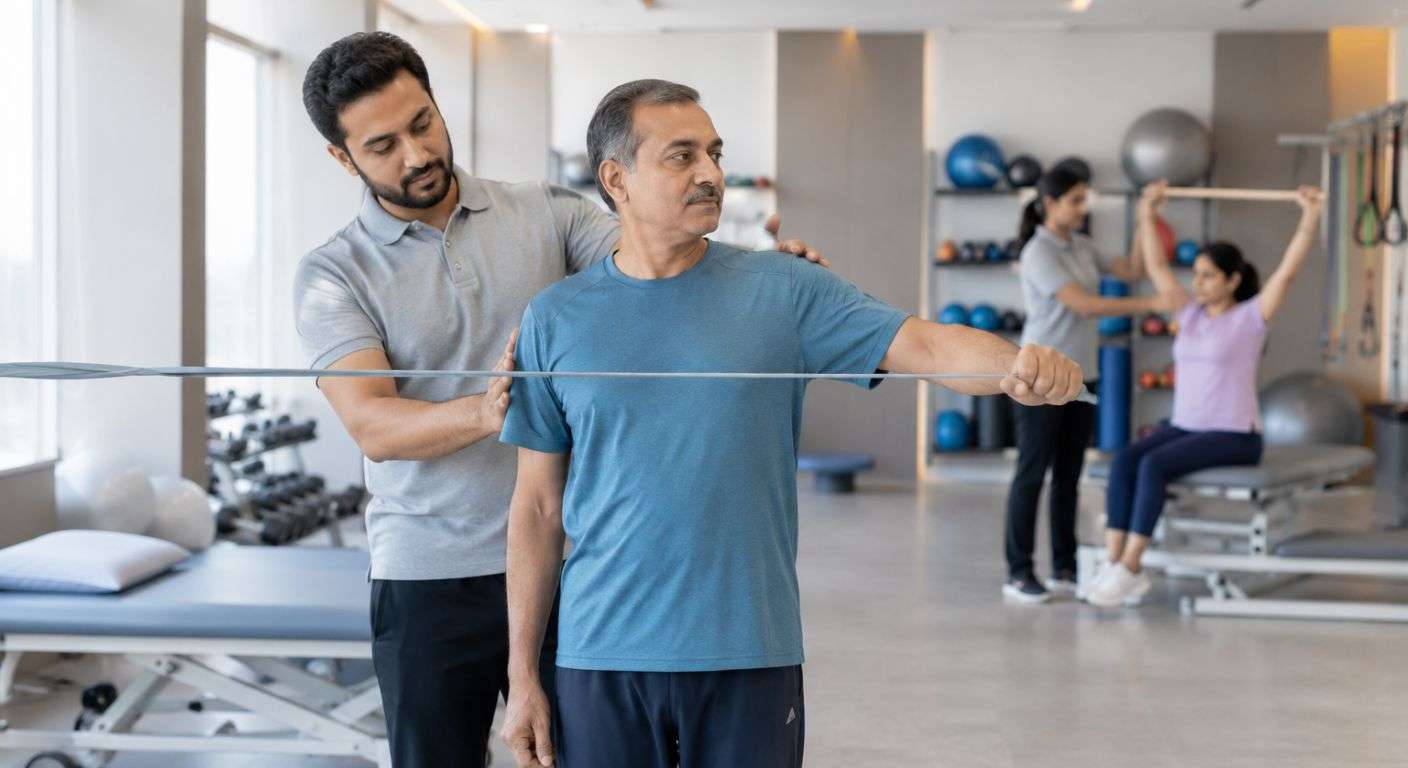
8. Resistance Band Exercises

As recovery progresses, your rehabilitation program may include gentle resistance exercises using elastic bands.
These exercises help strengthen the rotator cuff and surrounding shoulder muscles.
Exercise intensity should always be progressed gradually under guidance.

9. Wall Slides

Wall slide exercises help improve controlled shoulder movement and coordination.
They may be introduced as shoulder mobility improves.

10. Functional Shoulder Exercises

Later stages of rehabilitation often include functional exercises that simulate daily activities such as reaching, lifting light objects, and improving shoulder control.
These exercises prepare patients for returning to normal routines.

Exercises to Avoid Without Professional Guidance

Not every exercise is suitable during every stage of recovery.
Avoid:
  • Heavy overhead lifting
  • Sudden jerking movements
  • Exercising through severe pain
  • Returning to sports before medical clearance
  • Increasing resistance too quickly
If an exercise causes increased pain, stop and consult your healthcare provider.

Why Physiotherapy Plays an Important Role

A physiotherapist does much more than simply prescribe exercises.
Your rehabilitation program may include:
  • Shoulder assessment
  • Range of motion evaluation
  • Muscle strength assessment
  • Functional movement analysis
  • Individualized exercise progression
  • Education on posture and movement
  • Home exercise guidance
Regular supervision helps ensure exercises are performed safely and effectively.

Recovery Timeline

Recovery varies depending on the type of injury, treatment approach, age, and overall health.
In general, rehabilitation progresses through several phases:

Early Phase

  • Pain management
  • Gentle mobility
  • Protection of healing tissues

Intermediate Phase

  • Improved range of motion
  • Gradual strengthening
  • Improved shoulder control

Advanced Phase

  • Functional strengthening
  • Endurance training
  • Return to work or recreational activities
Your orthopedic surgeon or physiotherapist will determine when it is appropriate to move from one phase to the next.

Tips for Supporting Shoulder Recovery

In addition to your rehabilitation program:
  • Attend all scheduled therapy sessions.
  • Perform home exercises only as instructed.
  • Follow your surgeon’s postoperative guidelines if you had surgery.
  • Maintain good posture during daily activities.
  • Avoid activities that aggravate shoulder pain.
  • Attend follow-up appointments to monitor progress.

When Should You Seek Medical Advice?

Contact your healthcare provider if you experience:
  • Severe shoulder pain
  • Sudden loss of movement
  • Increasing swelling
  • Persistent weakness
  • Fever or signs of infection after surgery
  • Pain that worsens despite following your rehabilitation plan
Early evaluation helps identify complications and ensures your recovery stays on track.

Rotator Cuff Rehabilitation at Suvidha Hospital

At Suvidha Hospital, Hyderabad, our orthopedic rehabilitation team provides personalized rehabilitation programs for patients recovering from rotator cuff injuries and shoulder conditions.
Our approach includes:
  • Comprehensive shoulder assessment
  • Personalized rehabilitation plans
  • Supervised therapeutic exercises
  • Progressive strengthening programs
  • Functional movement training
  • Patient education
  • Ongoing progress monitoring
Our goal is to help patients regain shoulder mobility, improve strength, and return to their daily activities safely through evidence-based rehabilitation.