Lorem ipsum dolor sit amet, consectet eiusmod tempor incididunt ut labore e rem ipsum dolor sit amet. sum dolor sit amet, consectet eiusmod.

Visiting Hours

Gallery Posts

Home Exercise Program for Neurological Recovery

Recovering from a neurological condition is often a gradual process that continues long after a patient leaves the hospital. Whether recovering from a stroke, traumatic brain injury, spinal cord injury, Parkinson’s disease, or another neurological disorder, rehabilitation does not stop at discharge. A home exercise program can help patients continue working toward their recovery goals while complementing their rehabilitation plan.
A home exercise program is not a substitute for professional rehabilitation. Instead, it is a personalized set of activities recommended by your rehabilitation team to help improve mobility, strength, balance, coordination, and independence in everyday life.
At Suvidha Hospital, Hyderabad, our neuro rehabilitation specialists design individualized home exercise programs that support patients in continuing their recovery safely under professional guidance.

What Is a Home Exercise Program for Neurological Recovery?

A home exercise program is a personalized rehabilitation plan developed by healthcare professionals that allows patients to continue practicing therapeutic exercises outside the rehabilitation center.
Depending on your neurological condition and recovery goals, your program may include exercises that focus on:
  • Improving mobility
  • Increasing flexibility
  • Maintaining joint movement
  • Building strength
  • Improving balance
  • Enhancing coordination
  • Practicing daily functional activities

Why Is a Home Exercise Program Important?

Recovery continues even after formal rehabilitation sessions.
A structured home exercise program can help patients:
  • Continue practicing skills learned during therapy
  • Maintain mobility and flexibility
  • Improve physical function
  • Build confidence while performing daily activities
  • Encourage long-term participation in physical activity

Who Can Benefit from a Home Exercise Program?

A home exercise program may be recommended for individuals recovering from neurological conditions such as:
  • Stroke
  • Traumatic brain injury (TBI)
  • Spinal cord injury (SCI)
  • Parkinson’s disease
  • Multiple sclerosis (MS)
  • Peripheral neuropathy
  • Guillain-Barré syndrome (GBS)
  • Other neurological conditions, based on a healthcare provider’s recommendation
The type and intensity of exercises should always be individualized according to the patient’s medical condition, current abilities, and rehabilitation goals.

Goals of a Home Exercise Program

Every rehabilitation plan is unique, but common goals include:
  • Improve walking ability
  • Enhance balance
  • Increase muscle strength
  • Improve flexibility
  • Support better coordination
  • Improve endurance
  • Encourage independence in daily activities
  • Maintain progress achieved during supervised rehabilitation
Your rehabilitation team will regularly review these goals and modify the program as your recovery progresses.

Common Types of Home Exercises

The exercises included in a home program vary depending on your diagnosis and stage of recovery. The following categories are commonly used in neurological rehabilitation and should only be performed as instructed by your rehabilitation team.

1. Range-of-Motion Exercises

These exercises help move joints through their available range and may assist in maintaining flexibility and reducing stiffness.
They are often recommended for individuals with reduced movement following neurological conditions.

2. Strengthening Exercises

Muscle weakness is common after many neurological disorders.
Your rehabilitation program may include strengthening exercises designed to improve muscle function using body weight, light resistance, or other therapeutic equipment, depending on your abilities.

3. Balance Training

Balance exercises are commonly used to improve stability and reduce the risk of falls.
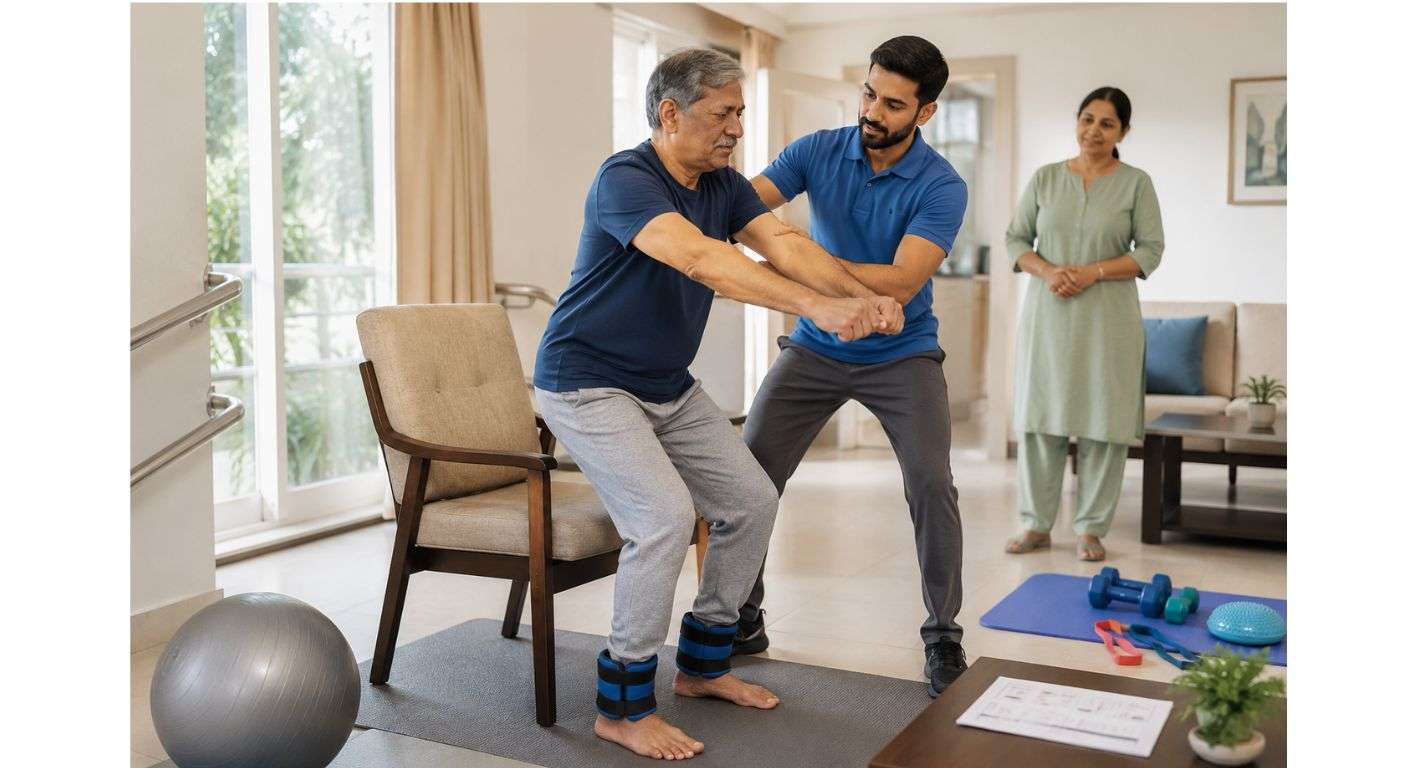
Examples may include supervised standing balance activities, weight shifting, and controlled movement exercises prescribed by your physiotherapist.

4. Walking Practice

Walking training may be included when appropriate to improve mobility and confidence.
Depending on individual needs, this may involve:
  • Indoor walking
  • Outdoor walking
  • Assistive devices
  • Gait practice recommended by your therapist

5. Functional Task Practice

Functional training focuses on activities that patients perform every day.
Examples include:
  • Sitting and standing safely
  • Reaching for household objects
  • Getting in and out of bed
  • Chair transfers
  • Stair practice (when appropriate)
These activities help improve independence in daily living.

6. Upper Limb Activities

Patients with weakness in the arm or hand may receive exercises designed to encourage movement, coordination, and functional use of the affected upper limb.
The specific activities depend on each patient’s rehabilitation goals.

7. Flexibility Exercises

Stretching exercises may help maintain joint mobility and muscle flexibility as recommended by your rehabilitation team.

8. Breathing Exercises

Some neurological conditions may affect breathing efficiency or endurance.
When appropriate, healthcare professionals may recommend breathing exercises as part of a comprehensive rehabilitation program.

Safety Tips for Exercising at Home

Safety should always come first.
Before starting your home exercise program:
  • Follow the instructions provided by your rehabilitation team.
  • Exercise in a clean, clutter-free area.
  • Wear supportive footwear if advised.
  • Use assistive devices as recommended.
  • Stay hydrated.
  • Exercise within your prescribed limits.
  • Do not continue an exercise that causes significant pain or discomfort.
  • Keep emergency contact information readily available if needed.
Home exercises should be performed only when medically appropriate.

The Role of Caregivers

Family members and caregivers often play an important role in neurological recovery.
They may assist by:
  • Providing encouragement
  • Helping maintain a regular exercise routine
  • Creating a safe home environment
  • Assisting with mobility if trained
  • Monitoring for changes that should be reported to healthcare professionals
Caregivers should follow the guidance provided by the rehabilitation team and avoid introducing new exercises without professional advice.

How Often Should Your Home Exercise Program Be Reviewed?

Recovery needs change over time.
Your rehabilitation team may adjust your program based on:
  • Improvement in strength
  • Changes in balance
  • Functional progress
  • New rehabilitation goals
  • Medical status
Regular follow-up appointments help ensure your home exercise program continues to meet your individual needs.

When Should You Stop Exercising and Contact Your Healthcare Provider?

Stop exercising and seek medical advice if you experience:
  • Sudden weakness
  • New numbness
  • Chest pain
  • Severe dizziness
  • Loss of balance resulting in a fall
  • Severe pain during exercise
  • Sudden neurological changes such as difficulty speaking or changes in vision
Prompt medical evaluation is important if new or worsening symptoms occur.

Tips for Staying Motivated

Maintaining a home exercise routine can be challenging.
The following strategies may help:
  • Follow a regular schedule.
  • Celebrate small improvements.
  • Keep your exercise area organized.
  • Involve family members when appropriate.
  • Attend scheduled rehabilitation appointments.
  • Communicate with your therapist about any difficulties.
Consistency, rather than intensity, is often the key to long-term participation in rehabilitation.

Home Exercise Support at Suvidha Hospital

At Suvidha Hospital, Hyderabad, our neuro rehabilitation team works closely with patients and families to develop personalized home exercise programs based on each individual’s condition and recovery goals.
Our rehabilitation services include:
  • Comprehensive neurological assessment
  • Personalized home exercise planning
  • Neuro physiotherapy
  • Occupational therapy
  • Balance and gait training
  • Functional mobility training
  • Patient and caregiver education
  • Progress monitoring and program updates
Our goal is to help patients continue their recovery safely while improving independence and quality of life.